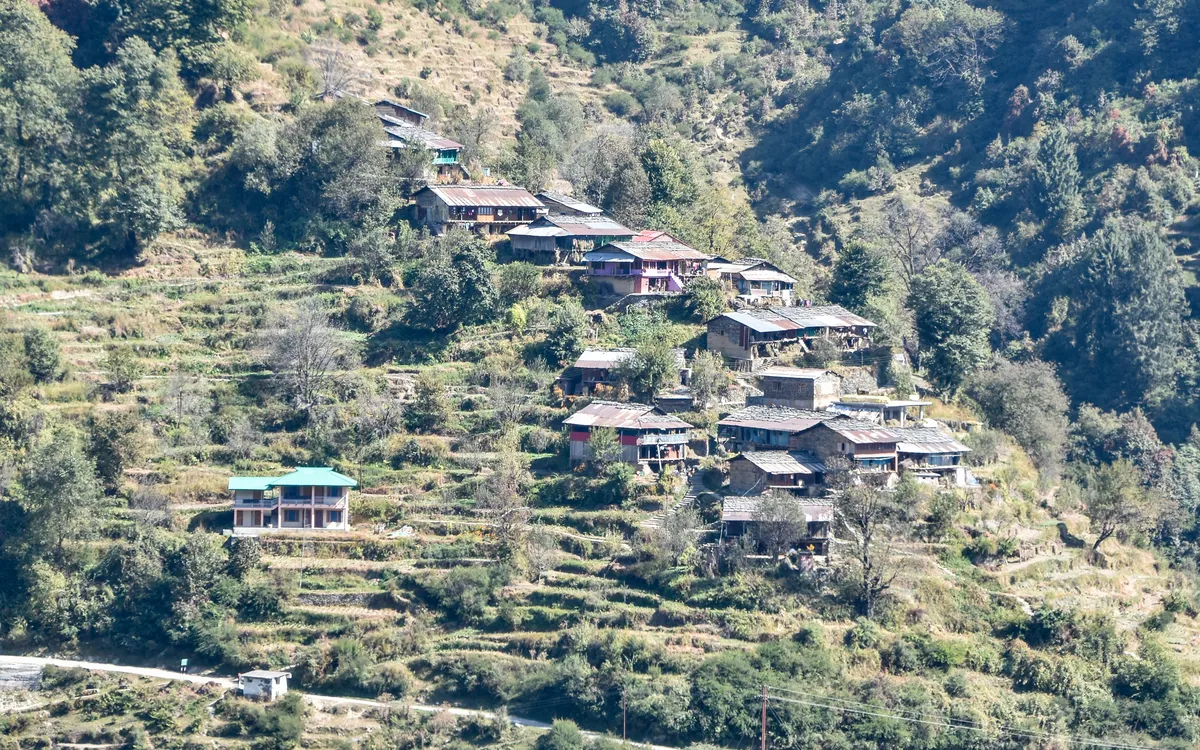
Some places are kept special by distance, others by a bad road. Barot is protected by both. It sits at about 1,830 m on the Uhl river, two valleys east of Dharamshala, at the end of a 25 km climb of first-gear hairpins from Ghatasni — and that climb is the toll that keeps the day-trip crowds out. What's left for those who come is the Himachal that postcards promise: trout water, deodar shadow, slate roofs, and a village that still goes quiet by nine.
Where exactly is Barot?
Barot lies on the border of Mandi and Kangra districts — the Uhl's left bank is Mandi, the right bank Kangra — about 65 km from Mandi town, 40 km from Jogindernagar and roughly 105 km from Dharamshala. The valley above it, called the Chuhar valley, runs deeper into the hills toward Lohardi and Multhan, and the high ridge behind it carries the shepherd routes to Rajgundha, Billing and the Thamsar Pass.
How to reach Barot from Dharamshala
Drive via Palampur, Baijnath and Jogindernagar, then turn up at Ghatasni for the final 25 km of switchbacks — around four hours all told, and one of the prettier drives in Kangra. Stop at Baijnath on the way: its stone Shiva temple has stood since 1204 AD and deserves twenty minutes. Coming from Delhi, it's roughly 530 km via Mandi (13–14 hours), which is exactly why basing in Dharamshala and visiting Barot from here makes more sense than the other way round.
Two honest cautions. The Ghatasni road is steep, narrow and best driven in daylight by someone who knows it. And in July and August the monsoon makes this slope landslide-prone — we simply don't run Barot trips in those months, and you shouldn't drive them either.
A village built by a power project
Barot exists because of electricity. Between 1925 and 1932 the British engineer Colonel B.C. Batty built the Shanan hydel project here — the Uhl's water is dropped through penstocks to a powerhouse at Jogindernagar that still runs its original machinery. To haul materials up the mountain they built a funicular haulage-trolley line, one of the steepest of its kind, and its track still stitches the hillside above the village past the aptly named Winch Camp. The project's famous 99-year lease, signed with the ruler of Mandi in 1925, expired in March 2024 — which briefly put this tiny village in the national news.
The trout
Barot is Himachal's original trout address. The Fisheries Department has run a trout farm here since 1959, breeding browns and rainbows and seeding the river with them, and the Uhl's pools hold wild fish for anglers willing to read the water. An angling permit costs under ₹200 per rod per day, fishing is best from March to June and again September to November, and even committed non-anglers should walk through the farm — and order the trout at dinner, which is the village's one reliable luxury (₹400–600 at most kitchens).
Things to do in and around Barot
- Cross the hanging bridge into the deodar forest of the Nargu Wildlife Sanctuary — 132 sq km of black bear, goral and monal country starts on the far bank of the river.
- Walk the trolley track above the village for the engineering, the views and the silence.
- Drive up the Chuhar valley toward Lohardi and Multhan — slate-roofed hamlets, kitchen-garden fields and almost zero tourism.
- Fish a Fisheries beat on the Uhl (permit under ₹200/rod/day, arranged locally at the farm).
- Walk to Rajgundha — the roadless village a day's walk up the gorge, our favourite easy multi-day in the region (Rajgundha Valley Trek).
- Go high — the Thamsar Pass trek climbs the working Gaddi migration route from this side of the ridge to about 4,600 m.
Where to stay and what to eat
Family homestays run ₹800–1,200 a night and serve the best food in the valley — pahari dham-style meals, kitchen-garden vegetables, river trout if you ask by afternoon. A handful of newer cottages and camps go from ₹2,500 upward, and the old PWD and Forest rest houses exist for those who enjoy paperwork. There is no reliable ATM and mobile network is patchy beyond the bazaar; carry cash and tell people you'll be quiet for a day.
When to go
March to June is the green season — 10–25°C, fishing open, treks running. September to November brings post-monsoon clarity and the best light of the year. December to February is properly cold with snowfall that can shut the Ghatasni road for days at a time — beautiful, but only for travellers with slack in their plans. July and August: don't.
Doing Barot the easy way
We reach Barot on foot from Dharamshala, as part of two treks: the Rajgundha Valley Trek (3D/2N, from ₹5,500 pp — Billing to Barot through the roadless village), and the Thamsar Pass Trek (5D/4N, from ₹14,000 pp) for the serious end. Or message us on WhatsApp and we'll build your own version.
← All blog postsQuestions, answered
Where is Barot Valley and how do I reach it?+
On the Uhl river about 65 km from Palampur side, reached via Jogindernagar–Ghatasani — around 3.5–4 hours' drive from Dharamshala. The last stretch is narrow mountain road; go in daylight.
What is there to do in Barot?+
Riverside walks, trout fishing (the hatchery dates to 1959), the Nargu wildlife sanctuary trails, and the roadless trek over to Rajgundha and Billing. It is a switch-off-your-phone kind of valley.
How much does a Barot Valley trip cost?+
We reach Barot on foot rather than by road, as part of the Rajgundha Valley Trek — 3D/2N from Billing through the roadless village, from ₹5,500 per person for groups of two or more, including transfers, guide, both homestay nights and all meals on trek.