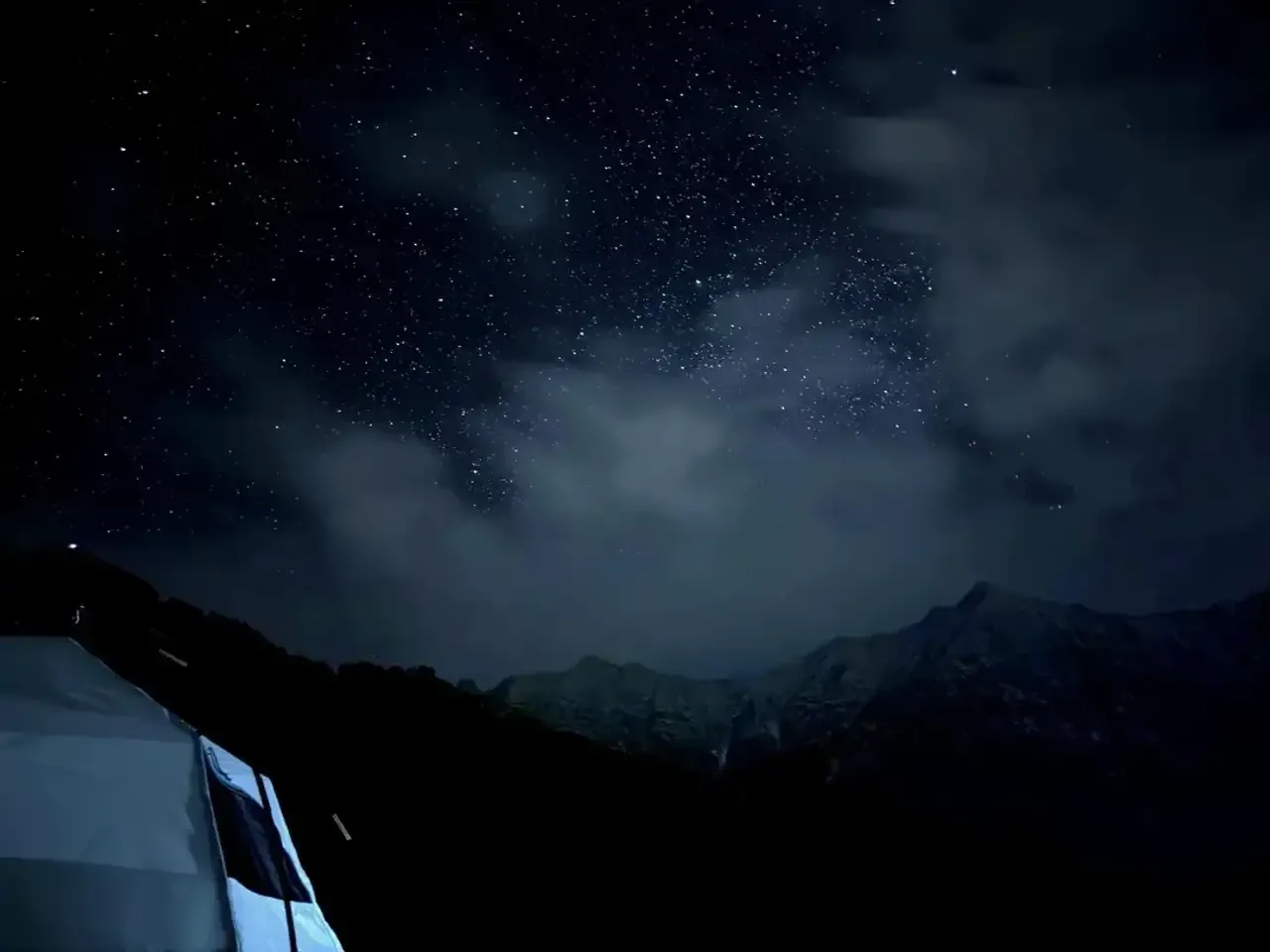
Dharamshala sits directly under the Dhauladhar — the steep outer wall of the Himalaya that rises almost vertically from the Kangra Valley. That geography is why this is one of the best trekking bases in Himachal: you can be on a forest trail twenty minutes after breakfast and on a 4,000 m ridge two days later. We have guided every one of these routes ourselves. Here they are, ranked from easiest to hardest, with the honest version of who each suits.
1. Triund Trek — the famous one, and rightly so (Easy)
The Triund trek is the classic Dharamshala trek and the right first choice for most people. It is about 9 km one way from McLeod Ganj, climbing through oak and rhododendron forest before the trail opens onto the Triund ridge at 2,875 m, with the whole Dhauladhar wall on one side and the Kangra Valley on the other. Do it as a hard day hike or — far better — camp overnight for the sunrise. Beginner-friendly, but the last steep kilometre is real. From ₹1,500 for the guided overnight version.
One honest caveat: Triund is popular enough that on an April or October weekend you will share the ridge with a few hundred people and a line of tents. That is not a reason to skip it — the view earns the crowd — but it is a reason to go midweek, or to walk on past the ridge toward the snow line where almost nobody follows.
2. Kareri Lake Trek — the quiet alpine alternative (Moderate)
If Triund feels too busy, the Kareri Lake trek is the answer: a 3-day route from Kareri village through pine forest and stream crossings to a clear glacial lake with a Nag Devta shrine on its bank. A tenth of Triund's crowd, colder nights, and a slower, more immersive rhythm. Best for travellers who already have a little trekking comfort and want to feel like they actually left the city.
Between the two sits the Laka Glacier trek, three days and from ₹3,000 — the same approach as Triund, then up past Laka Got to the old glacier snout. It is the cheapest way to stand on snow in this valley and the shortest trek here that genuinely feels high.
3. Snowline & Thatharana — the in-between treks (Moderate)
For people who want more than Triund but are not ready for a high pass, the Snowline trek (pushing above Triund toward the snow line at ~3,100 m) and the quieter Thatharana trek through meadow and forest are the sweet spot. Big views, manageable effort, fewer people.
4. Seven Sisters — ridge walking with fewer footprints (Moderate–Hard)
The Seven Sisters trek links a series of meadow shoulders along the Dhauladhar and rewards you with long, open ridge walking. A good step up for anyone who has done Triund and Kareri and wants something with more distance and solitude.
The other trek in this bracket is a completely different kind of walk: the Rajgundha Valley trek (3D/2N, from ₹5,500), which crosses from the Billing ridge to a village the road has never reached and out down the Uhl gorge to Barot. It is graded easy to moderate and you sleep in homestays rather than tents. If what you want from a trek is people and place rather than altitude, this is the one on the list to book.
5. Indrahar Pass — the serious one (Difficult)
The Indrahar Pass trek is a genuine high-altitude crossing at 4,342 m, the historical Gaddi shepherd route between Kangra and Chamba. Four days, a bivouac at Lahesh Cave, scree, snow into June, and real AMS risk. Only for fit trekkers with prior high-altitude experience — and never without a guide. The payoff is one of the great views in this part of the Himalaya.
6. The high passes — Kundli, Moon Peak, Minkiani and Thamsar (Difficult)
Beyond Indrahar the Dhauladhar keeps going, and four routes are worth naming. Kundli Pass (4D/3N, from ₹8,000) is the quieter crossing at a similar grade to Indrahar with a fraction of the traffic. Moon Peak (4D/3N, from ₹10,000) tops out at 4,610 m and is the highest thing you can stand on within a long weekend of McLeod Ganj. Minkiani Pass (5D/4N, from ₹10,500) links Kareri Lake to the string of high lakes on the Chamba side and is the most beautiful of the four. And Thamsar Pass (5D/4N, from ₹14,000) is the expedition on this list — the working Gaddi migration route over to Bara Bhangal, the remotest village in the district.
All four want prior high-altitude experience, and all four have a much shorter season than the lower treks — broadly June and then mid-September to early October, with the exact window moving year to year with the snow.
How to choose in one line
One day and you want a big view: Triund. A weekend and you want quiet: Kareri or Thatharana. A real challenge and you are already fit: Indrahar Pass. If you are unsure, that is exactly the conversation we have with guests before every booking — tell us your fitness and your days, and we will point you to the right one rather than the most expensive one.
When to go
March to June and September to November are the prime windows across the Dhauladhar. Triund stays walkable most of the year, with snow turning it into a four-season trek in winter. High routes like Indrahar and Kareri are best from May to October — the pass holds snow until early June and the monsoon makes the scree dangerous from July to mid-September.
What these treks actually cost, and what is in the price
The range runs from ₹1,500 for a guided overnight on Triund to ₹14,000 for the five-day Thamsar crossing, per person, for groups of two or more. What that covers is consistent across the list: a local guide, camping or homestay nights, meals on the trail, permits where the route needs them, and transfers to and from the trailhead. What it does not cover is personal gear, and on the longer routes a porter for your own bag, which is arrangeable and worth it on anything over three days. Current prices for every route are on the treks page — that page is generated from the same catalogue we quote from, so it is the number to trust if anything here has drifted.
Do you need a guide?
On Triund, in fair weather, in season — no, and plenty of people walk it alone. On anything else on this list, yes, and not as an upsell. Above the treeline the Dhauladhar has almost no marked trail: the route is a line across boulder and scree that is obvious to somebody who has walked it forty times and invisible in cloud to somebody who has not. Weather here closes in over about twenty minutes. The guide is not there to carry your bag; they are there to make the call about whether today is the day to cross.
How to build up to the hard ones
The sensible progression, if you have a few trips to give it, is Triund or Snowline first to find out how you handle a night at altitude, then Kareri Lake or Thatharana for a multi-day rhythm and a real camp, then a high pass. Doing that in order is the difference between an Indrahar crossing you enjoy and one you endure — and there is a whole guide to the Indrahar crossing specifically if that is where you are heading. For what to carry on any of them, the Dhauladhar packing list is the one we give our own guests, and the health and safety page sets out how we grade routes and when we turn back.
You can see all of these with dates, prices and what's included on the Dharamshala treks page. We run every trek with born-and-raised local guides and arrange permits, camping and transport so you only have to walk.
← All blog postsQuestions, answered
Which is the easiest trek in Dharamshala?+
Triund (2,850 m) — a 9 km day hike from McLeod Ganj that most first-timers finish in 4–5 hours. The Guna Devi forest walk from Dharamkot is even gentler and family-friendly.
What is the hardest trek from Dharamshala?+
Indrahar Pass (4,342 m) is the classic difficult crossing — 4 days over the Dhauladhar ridge. Moon Peak (4,610 m) and Thamsar Pass are in the same difficult class.
Do I need a guide for Dhauladhar treks?+
For Triund a guide is optional in fair weather. For anything beyond it — Kareri Lake, Indrahar, Minkiani — a local guide is strongly recommended: trails are unmarked above the treeline and weather closes in fast.