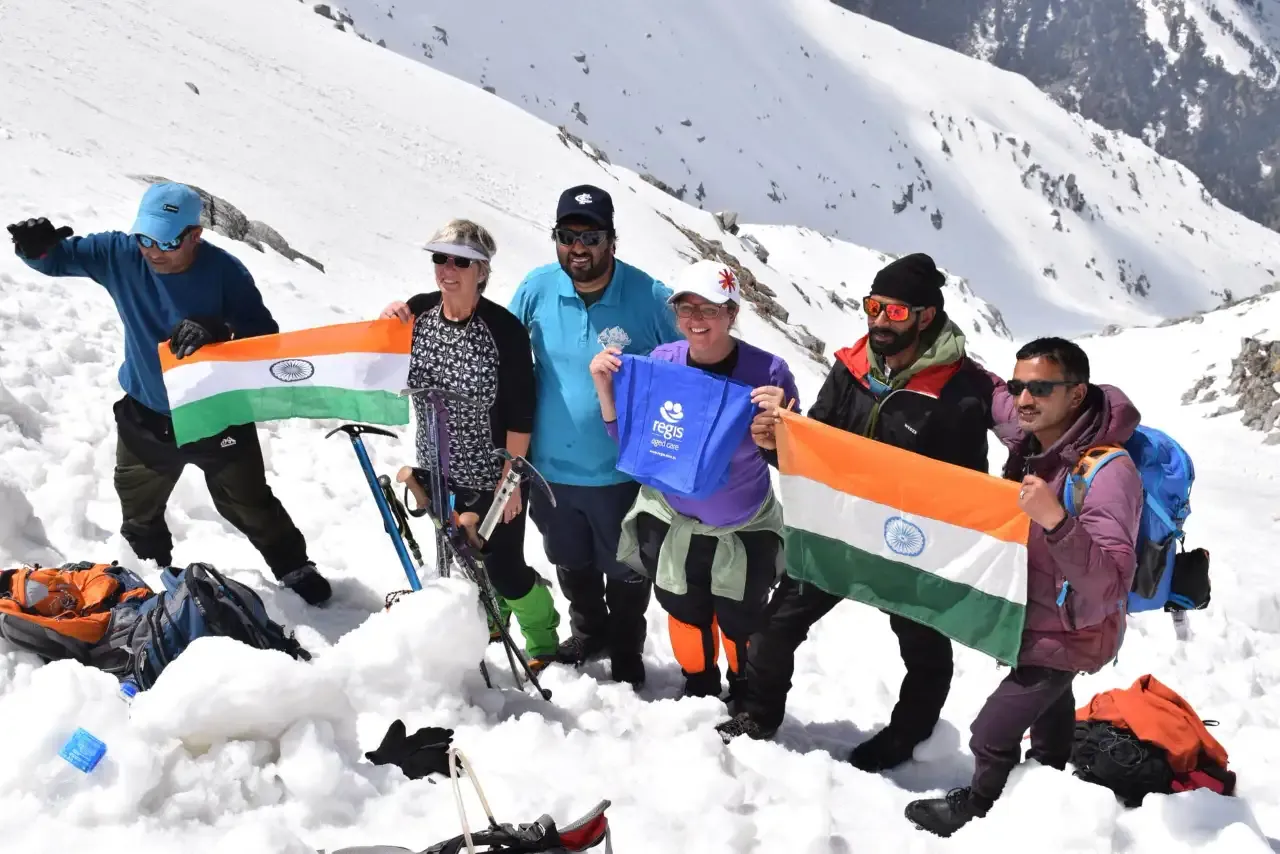
Indrahar is the pass. If you have done Triund, you have looked up at the ridge that includes Indrahar. The crossing at 4,342 metres is the historical pilgrim route used by Gaddi shepherds moving sheep between Kangra and the Ravi valley in Chamba. It is a serious trek. People underestimate it every summer. We are writing this guide to help you plan it honestly.
Fitness
The baseline is a five-kilometre run under thirty minutes, or a ten-kilometre fast walk with a day-pack with no aches. You should have done at least one overnight trek above three thousand metres in the previous six months. If you have not, consider a warm-up like Prashar Lake or Kheerganga before attempting Indrahar.
Give yourself eight weeks if you are starting from nothing much. The training that actually transfers is not running — it is loaded uphill walking. Two sessions a week on the steepest ground you can find, carrying the pack you intend to trek with, building from forty minutes to two hours. Add one long walk at the weekend. The specific thing you are training for is the summit day, which is roughly nine hours of movement with a very long descent at the end of it, and descending is what wrecks people who trained only on flat ground.
The other half of it is your feet. Whatever boots you plan to wear, put fifty kilometres through them before the trek. Blisters at Lahesh Cave are not a minor inconvenience — they are the most common reason somebody sits out the summit day.
The itinerary
Most operators, including us, split the trek into four days. Day one is McLeod Ganj to Triund. Day two is Triund through Laka Got to Lahesh Cave at three thousand five hundred metres. Day three is the summit push to the pass and descent back down to Triund. Day four is the return to McLeod Ganj. The reason for the three-day camp rotation is acclimatisation. The summit cannot be attempted from Triund the same day. It is too much altitude too fast.
- Day 1 — McLeod Ganj to Triund (2,875 m). Nine kilometres, four to five hours, the same walk everyone does. Treat it as the warm-up it is and do not race it.
- Day 2 — Triund to Lahesh Cave (3,500 m) via Laka Got. Short in distance, serious in gain. You arrive by early afternoon, which is deliberate: the rest of the day is acclimatisation, not spare time.
- Day 3 — the pass (4,342 m) and back down to Triund. A pre-dawn start, boulder and scree to the col, and a very long descent. This is the day the trek is graded on.
- Day 4 — Triund to McLeod Ganj. Downhill and done by lunch.
Note what the itinerary does not do: it does not cross the pass and continue into Chamba. The full Gaddi crossing carries on down the far side to the Ravi valley and takes longer, needs a different logistics chain and is a different trip. What almost everybody books, and what this guide describes, is the out-and-back to the col.
Lahesh Cave
Lahesh is a massive overhanging rock slab used for centuries by Gaddi shepherds for shelter. We pitch bivouac tents under the overhang. It is dry and wind-sheltered but cold. Night temperatures in June and September drop below freezing. In July and August the cave gets condensation and you will wake up to damp tent walls. Pack a proper sleeping bag rated to minus five, not the all-purpose one you took to Triund.
Gear that really matters
Four-season boots with a proper sole, not the trail runners that got you up Triund. Category three or four sunglasses, because the scree field near the pass is a snow basin in May and the glare will burn your eyes in an hour without protection. Inner and outer gloves. A down or synthetic-fill insulation layer. Gaiters if you are trekking in April, May, or late October.
Two more that people skip and regret. A head torch with fresh batteries, because day three starts in the dark and a phone torch will not do; and trekking poles, which most people regard as optional and which take a genuinely large fraction of the load off your knees on the descent. The full list is on the Dhauladhar packing page.
On what not to bring: this is not a trek where a bigger pack helps. Everything you carry, you carry over a 4,342 m pass. If you are unsure about an item, leave it — the one exception being warm layers, where the mistake runs entirely in the other direction.
AMS protocol
We observe a simple rule. Day two is a climb-rest day. No one summits on day two. Anyone with a headache, nausea, or unusual breathlessness at Lahesh descends. The lead guide carries a pulse oximeter and a satellite SOS. If you have a prior AMS history or a pre-existing condition, speak to a doctor about Diamox before the trip. We do not supply it.
Worth being blunt about what AMS actually looks like, because people talk themselves out of reporting it. A headache that does not clear with water and rest, nausea, no appetite, broken sleep and breathlessness doing nothing are the symptoms. They are not a fitness problem and they are not something to push through — a very fit twenty-five-year-old is if anything more likely to keep quiet and get into trouble. The rule that keeps everyone safe is that descending is always available and never a failure. Six hundred metres down is usually enough to fix it entirely.
When to go
Ideal windows are mid-May to mid-June and mid-September to mid-October. The pass holds snow until early June most years. Monsoon makes the scree field dangerous. October is often the clearest month but the morning temperatures at the pass can drop to minus ten.
What each window actually feels like: late May and early June means snow on the approach to the col, an ice axe and possibly crampons carried by the guide, and long daylight. Mid-September to mid-October means dry rock, the clearest air of the year and the best views, with mornings cold enough that you will want the down layer at the pass. The seasonal guide covers the valley month by month.
Permits, guides and what it costs
The crossing runs through forest-department land and the permit is handled as part of the booking rather than something you arrange yourself. Our four-day version runs from ₹9,000 per person for groups of two or more, which covers the guide, camping and bivouac kit, meals on the trail, permits and the transfers at either end. Live pricing is on the Indrahar Pass trek page. Personal gear is yours, and a porter for your own bag is arrangeable and worth considering — on this route the difference between carrying eight kilos and carrying three is the difference between summit day being hard and being grim.
If Indrahar turns out not to be your trek
There is no shame in reading the fitness section and concluding it is next year's trip. The honest alternatives at a lower grade are Kareri Lake, which gives you a real multi-day rhythm and a glacial lake without the pass, and Minkiani, which is a longer trek at a slightly gentler grade and arguably a more beautiful one. The ranked list of Dhauladhar treks lays the options out end to end.
If you are planning a crossing and want a straight answer about whether your dates and your fitness line up, ask us — we would far rather move somebody to a different route in advance than turn them around at Lahesh. Full detail on how we grade and when we call a day off is on the health and safety page, or just get in touch.
← All blog postsQuestions, answered
How difficult is the Indrahar Pass trek?+
Genuinely difficult — a 4D/3N crossing to 4,342 m with steep boulder sections above Lahesh Cave. You need good fitness, prior hiking experience and a local guide; it is not a Triund follow-on for everyone.
When is Indrahar Pass open?+
Roughly mid-May to mid-June and September to mid-October. The pass holds snow late into spring and picks it up again by late autumn; monsoon months are dangerous on the rock slabs.
How much does the Indrahar Pass trek cost?+
From ₹9,000 per person (groups of two or more) for 4 days/3 nights, including guide, camping, meals on trek, permits and trailhead transfers. Personal gear and a porter for your own bag are extra.