Masroor: Himachal's hidden rock-cut temples
Carved from a single sandstone ridge in the 8th century and mirrored in a sacred pool with the Dhauladhar behind, the Masroor temples are the north Himalaya's 'Ellora' — and almost nobody visits.
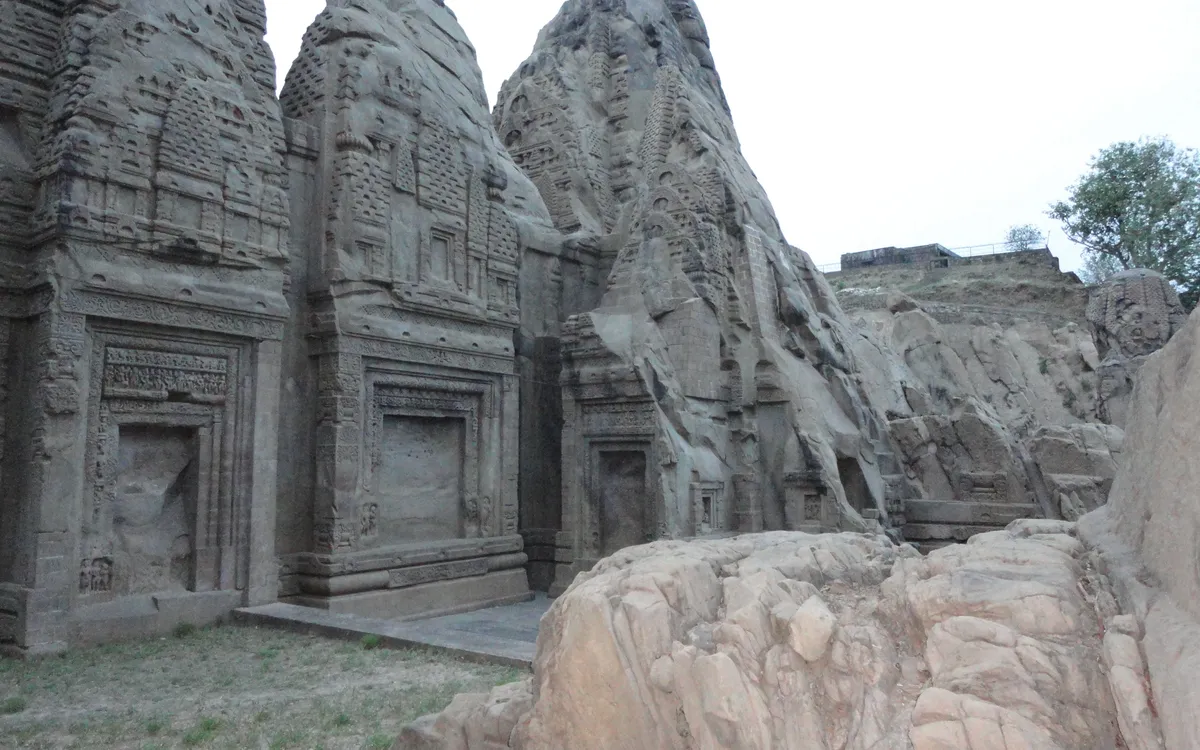
Most travellers to the Kangra Valley never hear of Masroor, which is exactly why it's so special. About two hours from Dharamshala, a cluster of fifteen Nagara-style shrines stands carved directly out of a single sandstone ridge — the only monolithic rock-cut temple complex in the entire northern Himalaya.
Dating to the 8th century and never finished, the Masroor (Masrur) temples were chiselled top-down from living rock, like a Himalayan answer to Ellora or Angkor. A 1905 earthquake damaged parts of the complex, which only adds to its weathered, otherworldly feel.
In front of the temples lies a sacred rectangular pool. On a clear morning it mirrors the carved towers with the snow wall of the Dhauladhar rising behind — one of the most photogenic and least-photographed scenes in Himachal.
Clear winter and spring mornings (October to April) give the sharpest Dhauladhar reflection. The ridge is unshaded, so go early and carry water. It's an ASI-protected site with a small entry ticket.
We run it as an unhurried Masroor rock-cut temples tour, and it pairs well with the Kangra Shaktipeeth temple circuit or the Pong Dam wetland for a deeper Kangra day.
← All blog postsA 15-shrine temple complex carved top-down from a single sandstone ridge in the 8th century — often called the Ellora of the Himalayas — facing the Dhauladhar across a rock-cut pool.
It is about 40 km southwest, an hour by road. A private day tour costs about ₹2,900 per person for two sharing and pairs well with Kangra Fort or Pong Dam.
If you care about heritage, absolutely — it is a protected ASI monument, uncrowded on weekdays, and unlike anything else in Himachal. Allow 1–2 hours plus the drive.