Work · Dharamkot
Trek & Dine Café
Best · Breakfast
Dharamkot sits in the pines above McLeod Ganj — close enough to nip down for anything you need, high enough to feel like its own world. It's long been the place travellers land when they want to actually stop: the yoga crowd, the writers, the recovering-from-something, the working-remotely.
It's smaller and steeper than Bir, wrapped in deodar forest, and the community is real — you'll be recognised at your café by week two. This is the guide to living in it, not just visiting.
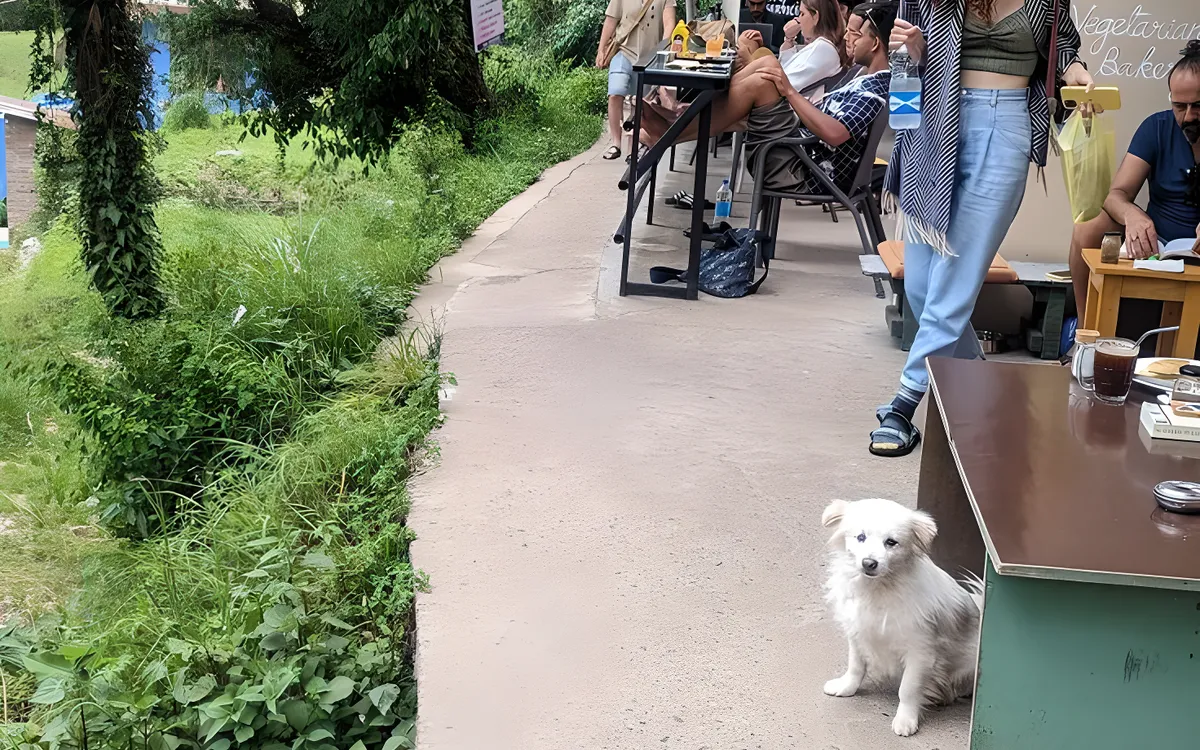
Garden cafés with a valley view and a plug. Wifi is decent in the dry months and moody in the monsoon — have a backup café.
Israeli, Tibetan, health-bowl and homestyle — Dharamkot punches far above a village its size.
Dharamkot runs on chai, not cocktails. Nights are for firelight, guitars and a walk under stars — bring your own bottle if you must.
Forest paths, a secret waterfall and the trail to Triund — all straight from your doorstep.
This is Dharamkot's real draw — one of India's great places to sit still on purpose.
The practical stuff for staying a while.
No rush, no checklist — just a base to stay, a desk with wifi and a local on call for the month, in Bir Billing or Dharamkot. From ₹30,000. Or message us and tell us your dates.
It's one of the original Indian slow-stay villages, so yes — but manage the wifi. The main cafés are fine in the dry season and patchy in the monsoon, so keep a local SIM with data as backup and a couple of go-to work cafés.
Notoriously long. A week is common, a month is normal, and a fair few come for a course and stay the season. It's built for slow.
Among the best in India. Tushita and Dhamma Sikhara run the well-known courses, and drop-in yoga studios open through the season — a morning class is never far.
March–June and September–November for the clearest weather and open trails. Winter is snowy and atmospheric; monsoon is lush but wet and leech-prone on the paths.